How does immersion cooling work in one sentence?
Compatible servers are immersed in a non-conductive dielectric liquid that directly absorbs their heat, then transfers that heat to an exchanger or cooling loop.
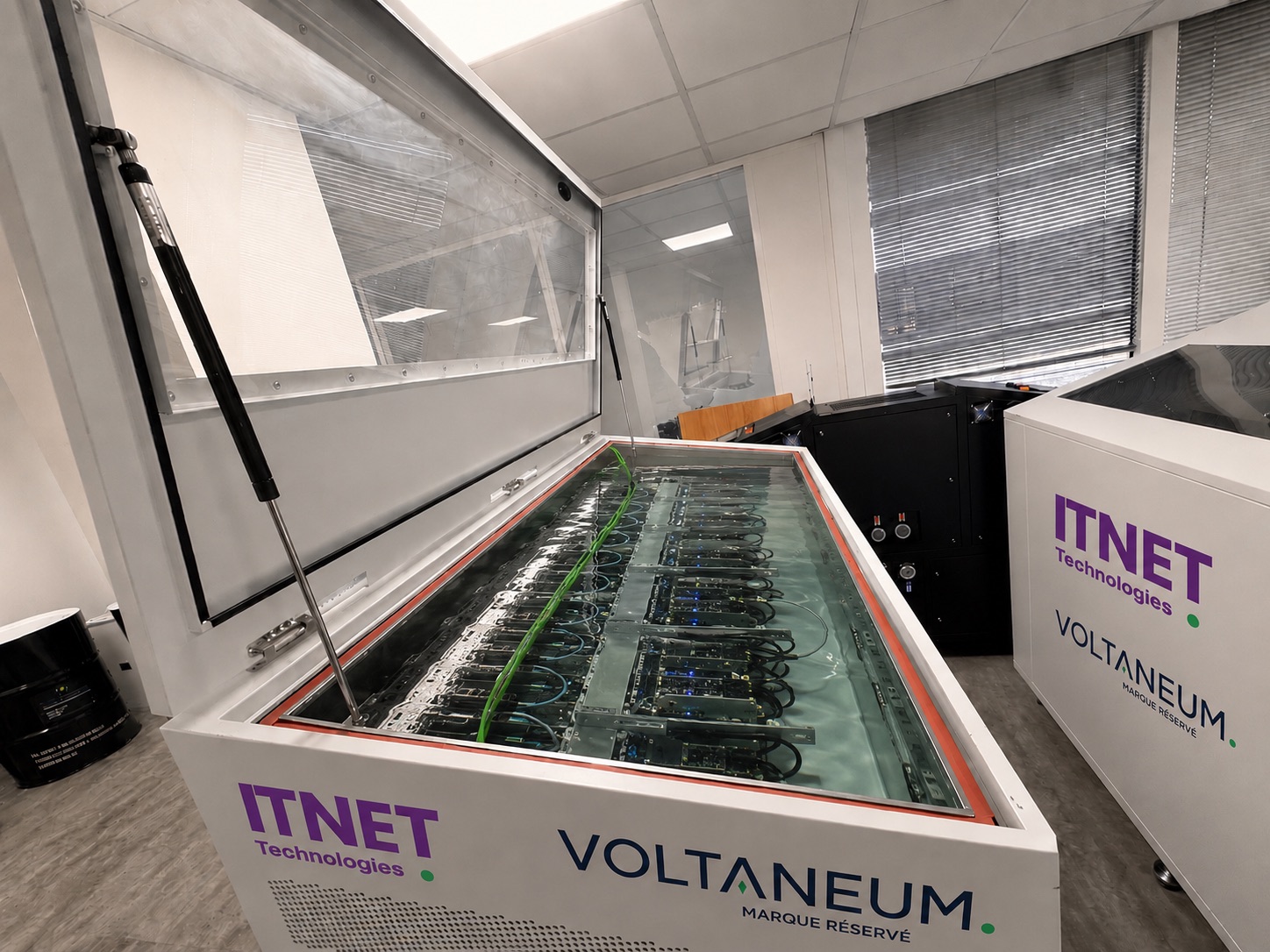
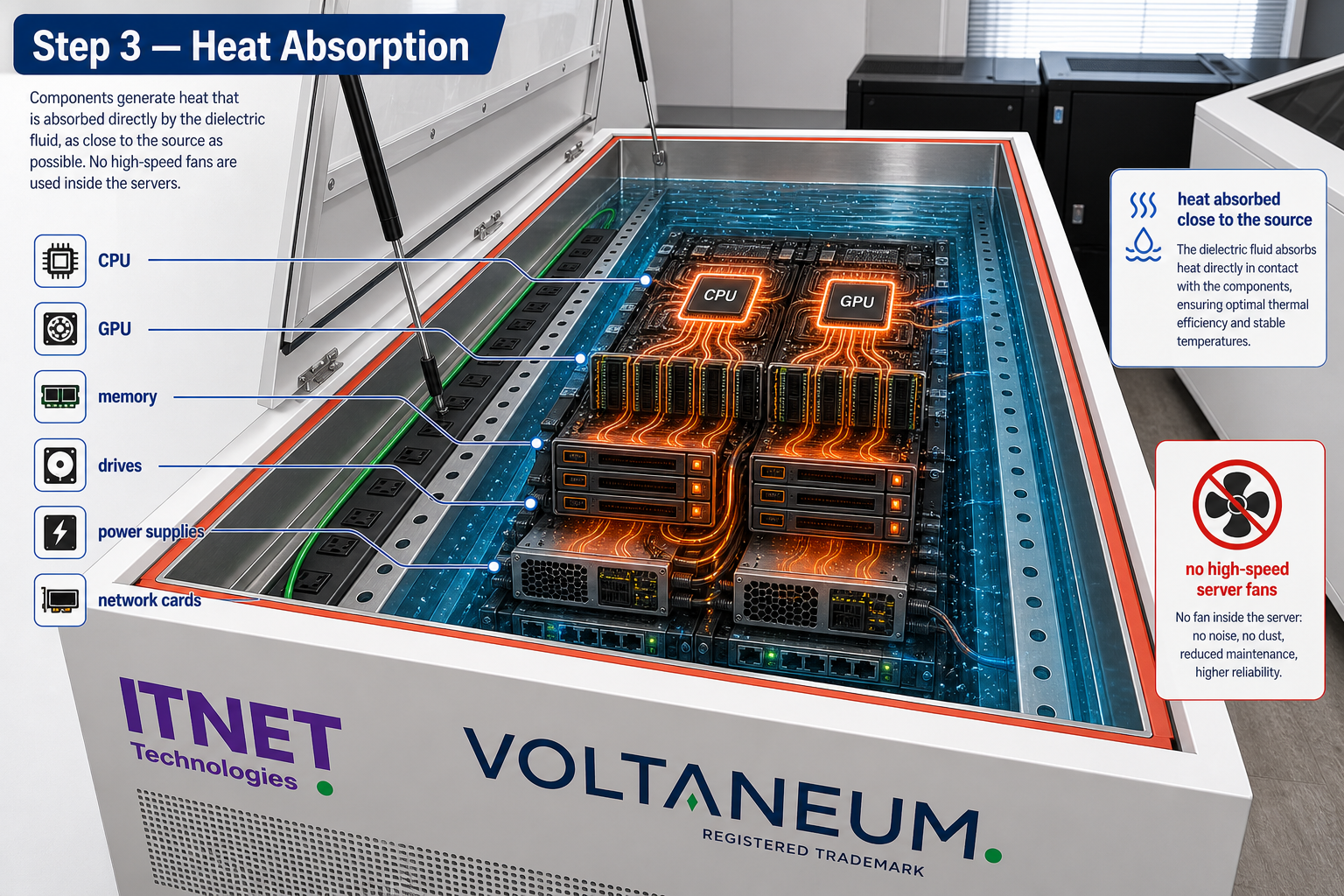
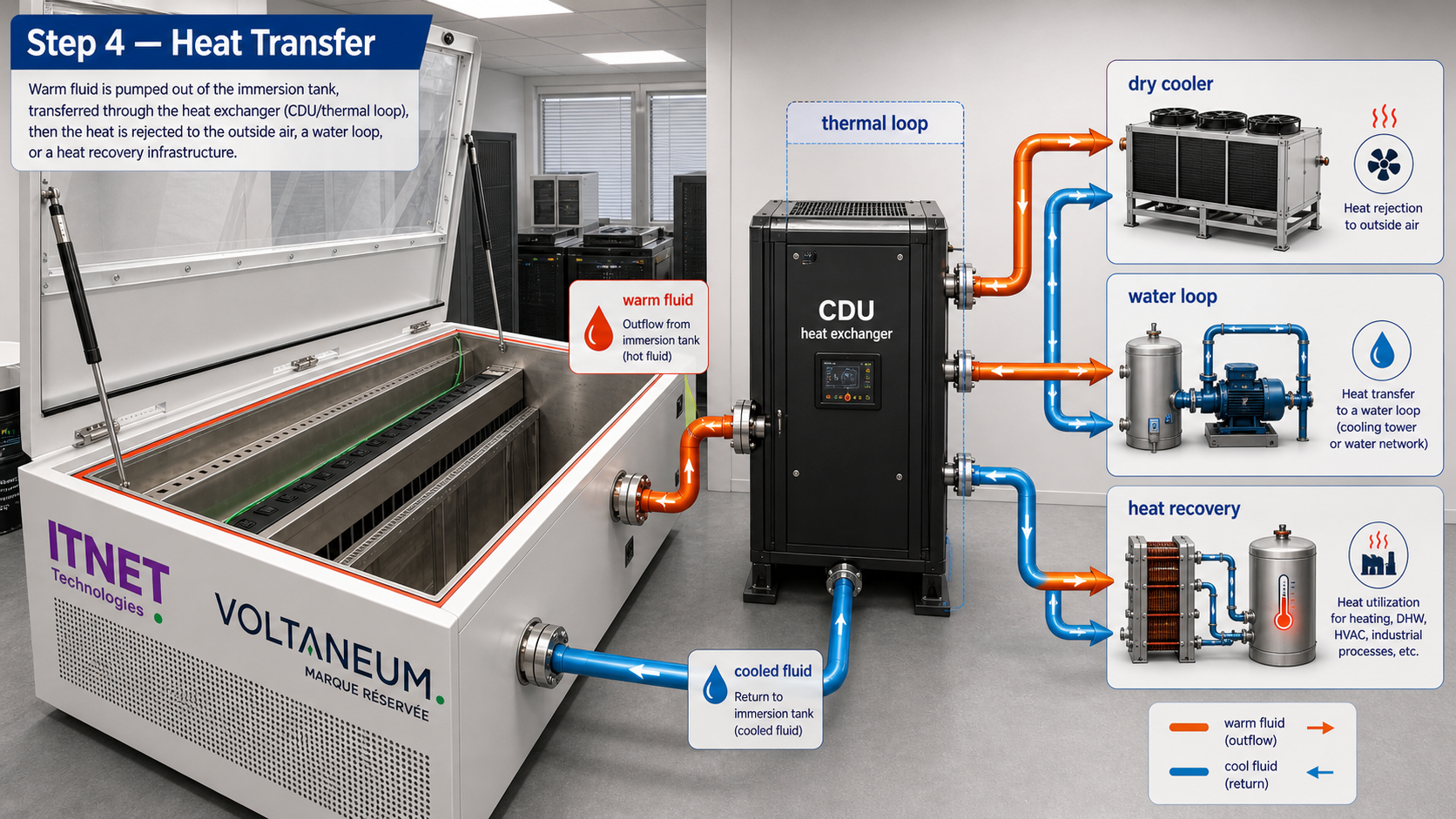
Immersion cooling places compatible servers inside a tank filled with non-conductive dielectric fluid. The fluid directly contacts hot surfaces, absorbs component heat and carries it to a heat exchanger or CDU.
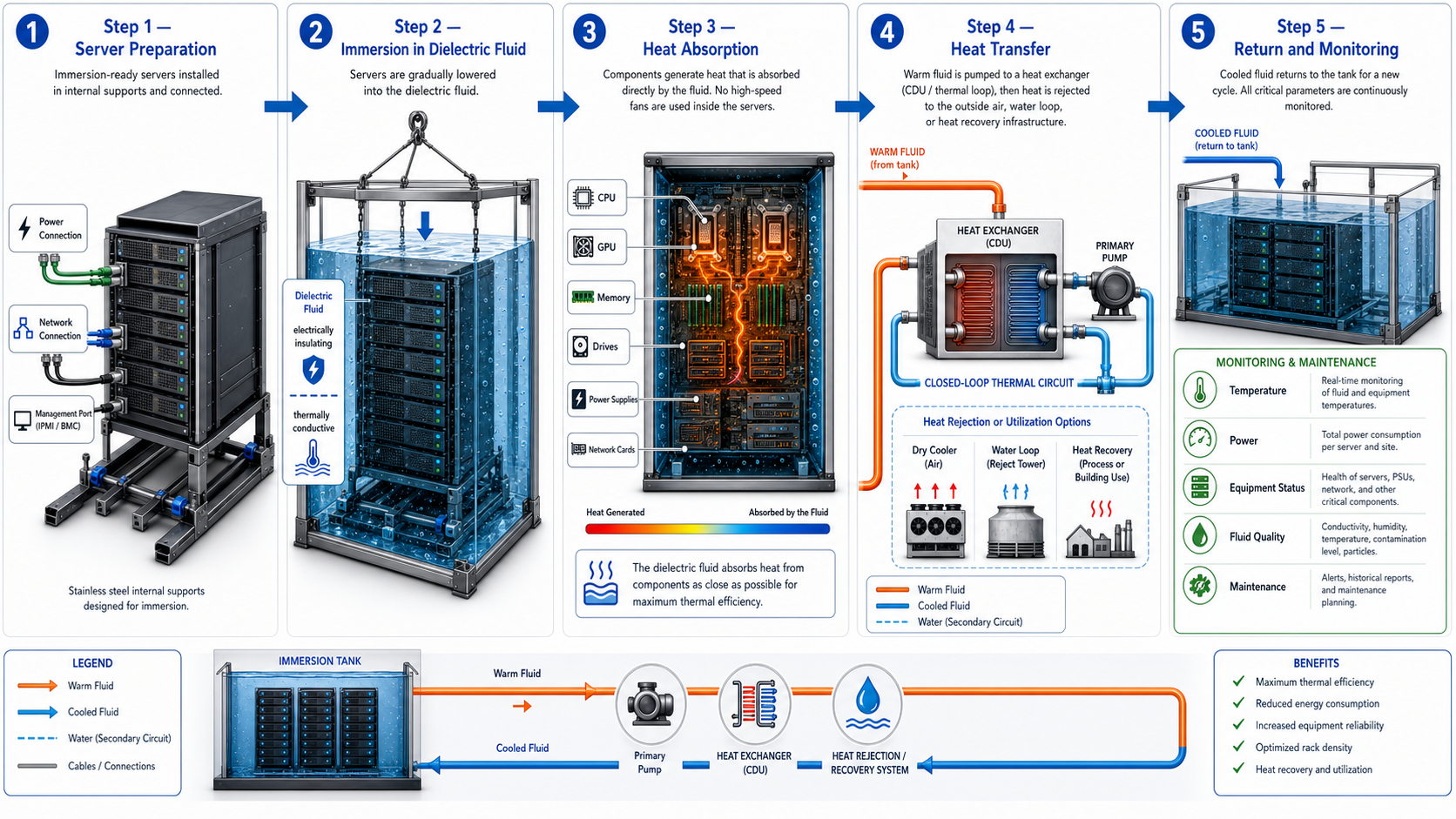
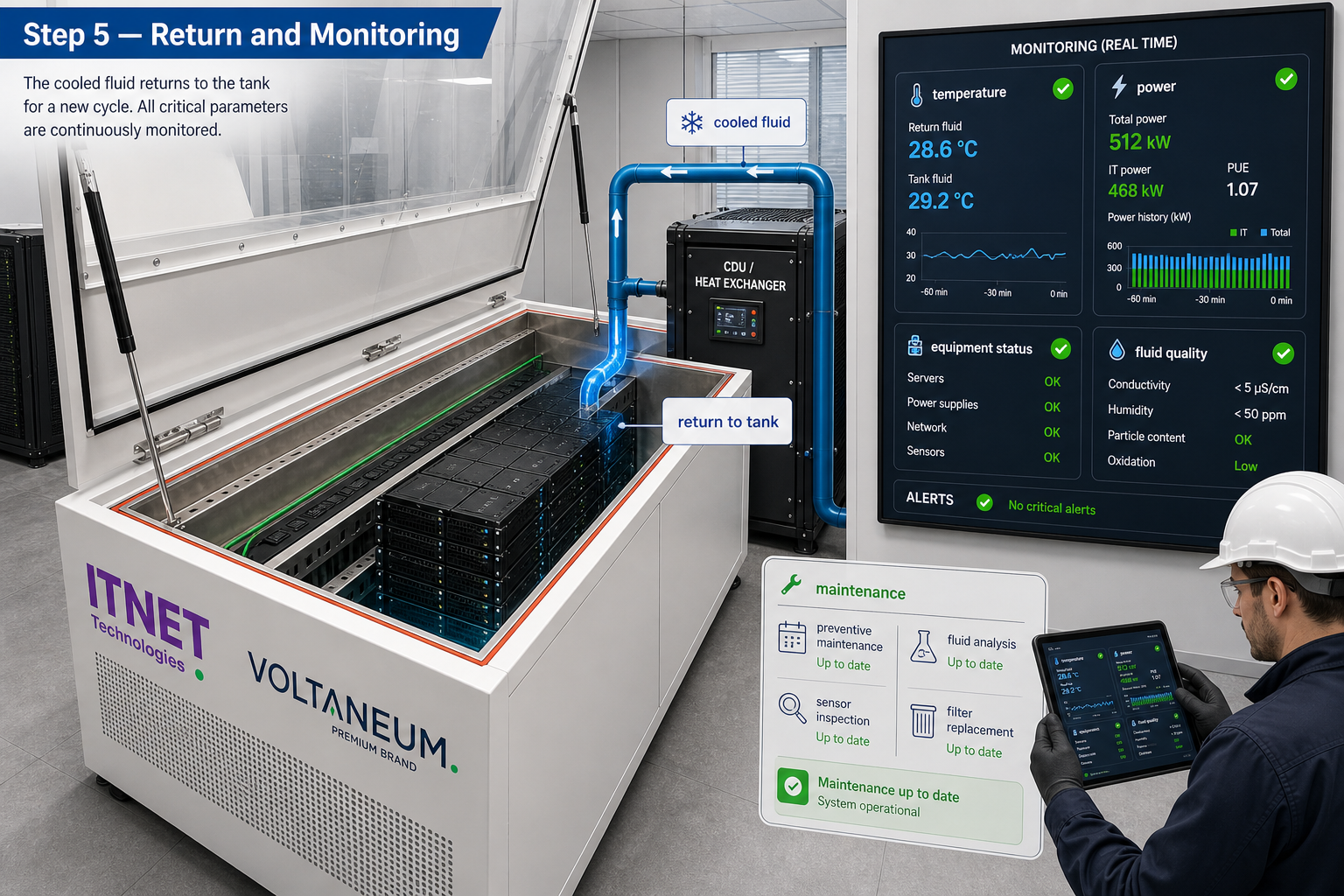
In a single-phase architecture, the liquid remains liquid during normal operation: it does not boil, moves inside the tank or around equipment, and returns cooled to the bath.
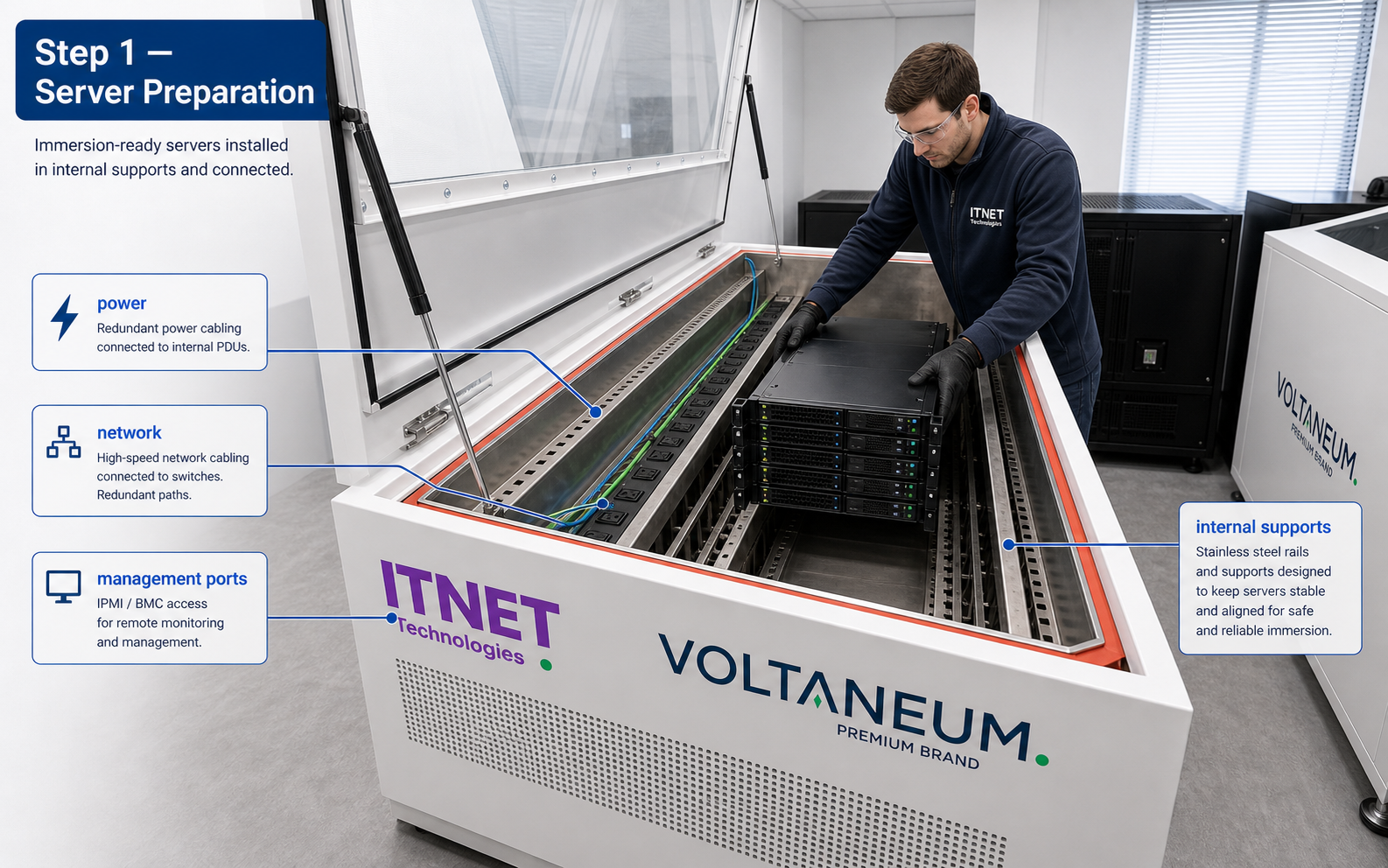
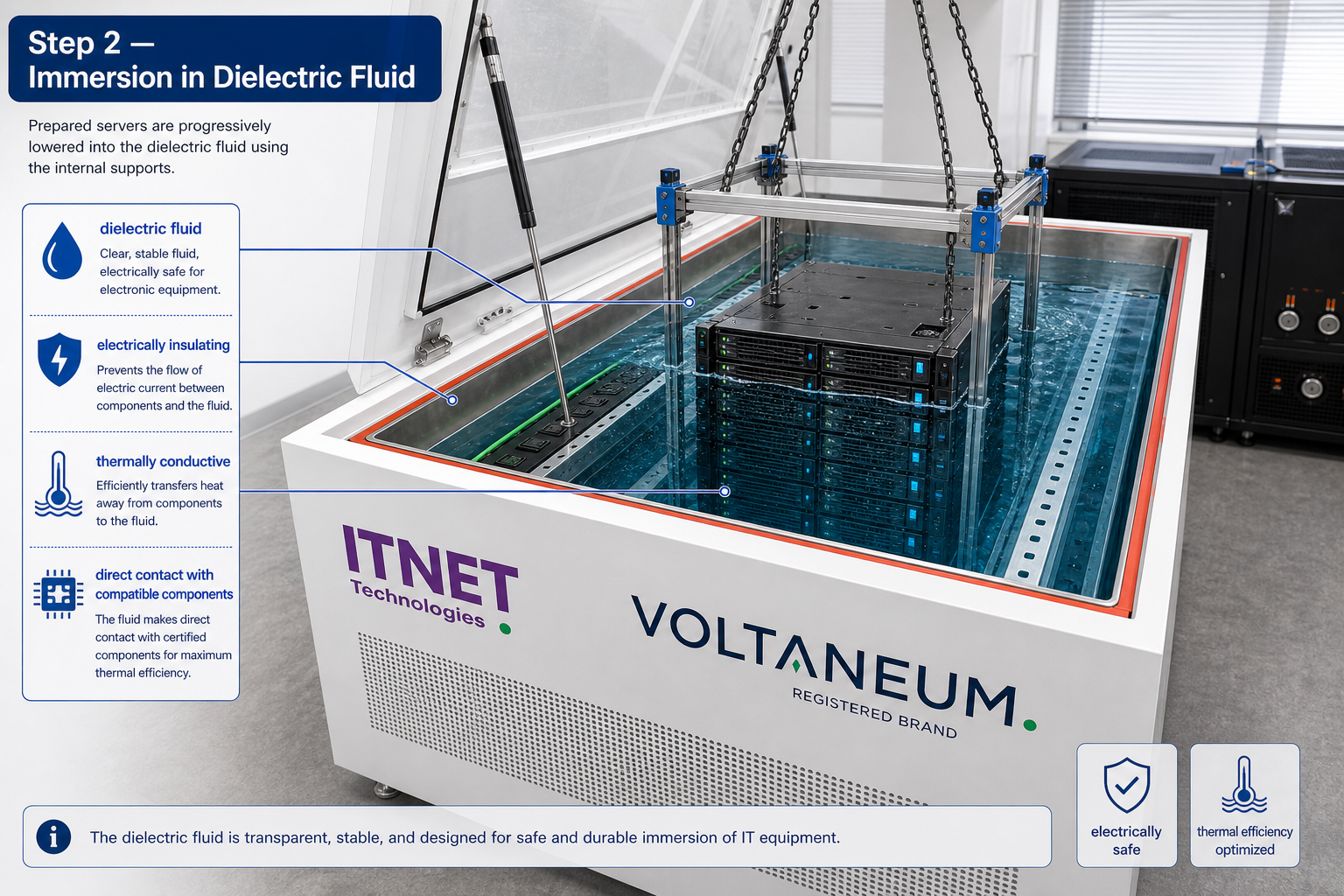
How immersion cooling works must be explained before selling it: the compatible server is installed in a tank, dielectric fluid absorbs heat by direct contact with components, then a thermal loop extracts that heat to an exchanger, CDU or dry cooler.
Technical value comes from direct contact between the fluid and compatible components. This reduces dependency on server fans, limits hotspots, lowers noise and enables density that better fits GPUs, AI and HPC.
Credibility then depends on operating evidence: fluid documentation, material compatibility, filtration, moisture monitoring, acidity, dielectric strength, electrical safety and maintenance procedures.
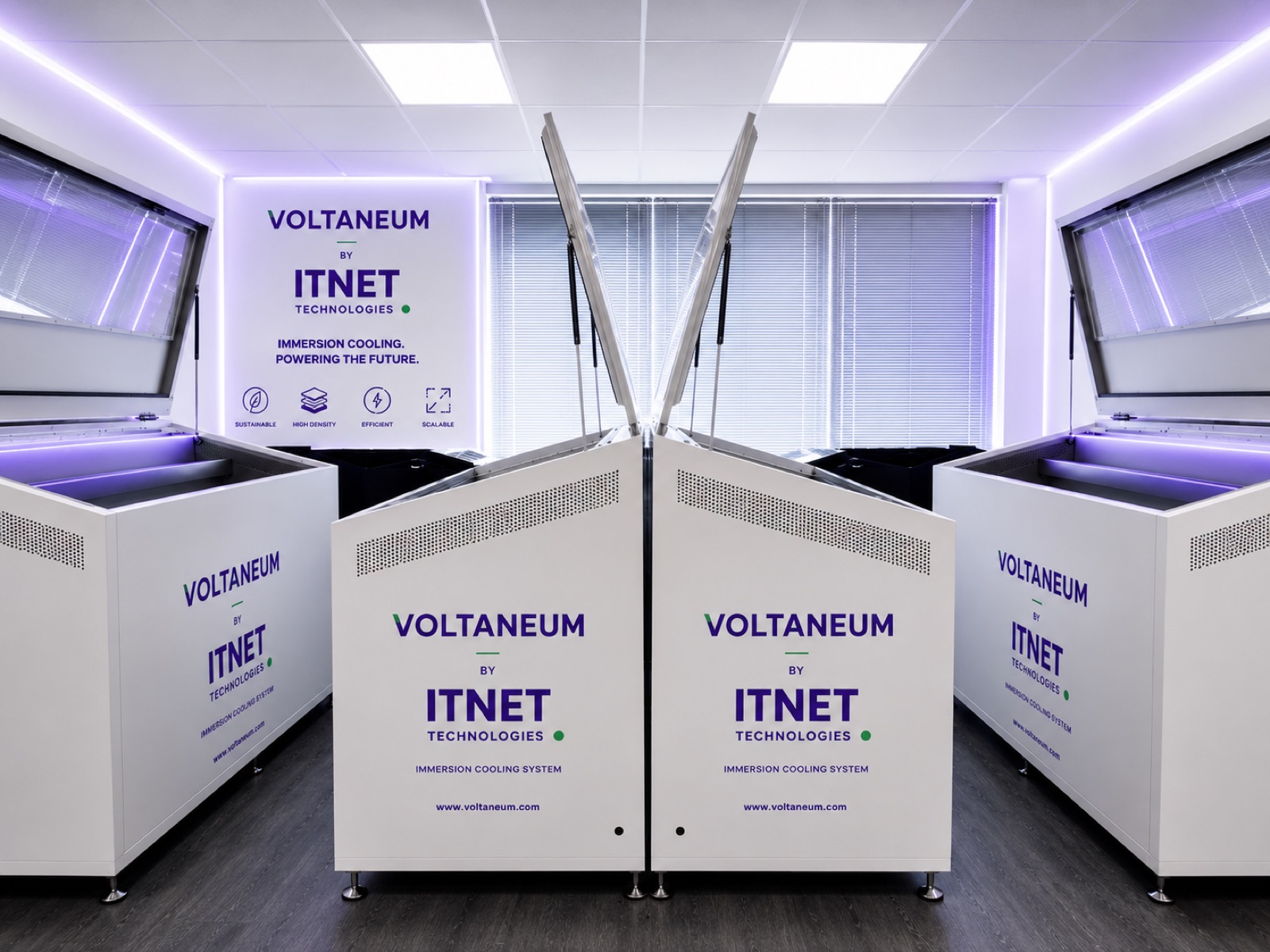
Each part of the guide is paired with a real visual selected to remain readable, industrial and restrained.
| Air cooling | Cools air around servers and strongly depends on fans, room cooling and airflow control. |
|---|---|
| Water cooling | Uses liquid loops or cold plates, but often keeps part of the airflow and server-level constraints. |
| Immersion cooling | Places compatible servers in a dielectric bath to capture heat directly at hardware contact. |
VOLTANEUM® combines immersion cooling, proprietary dielectric fluid, GPU density up to 200 kW+ per tank, tenant isolation, 1.03 target PUE, DCIM automation, 2D/3D monitoring and request/payment/provisioning workflows.
The VOLTANEUM® proprietary dielectric liquid provides non-conductive electrical insulation, stronger thermal stability, reduced exposure to dust, oxidation and vibration, and more predictable maintenance through fluid, filtration, acidity, moisture and dielectric strength monitoring.
The -40°C to 250°C range is indicated on VOLTANEUM® packaging. Quality control on the tested batch reports a -37°C pour point, a 250°C open flash point and observed dielectric breakdown voltage of 52 kV.
The VOLTANEUM® white paper download is available after entering a business email in the public page form.
Compatible servers are immersed in a non-conductive dielectric liquid that directly absorbs their heat, then transfers that heat to an exchanger or cooling loop.
Yes. In immersion cooling, the fluid directly contacts compatible components. This is possible because the fluid is dielectric and electrically insulating under intended conditions.
In single-phase immersion, the fluid remains liquid. In two-phase immersion, the fluid evaporates near hot surfaces and then condenses. VOLTANEUM is presented around a single-phase approach.
GPU and HPC servers concentrate significant heat. Immersion cooling helps stabilize temperatures, reduce noise and increase usable density.