What is HPC colocation?
HPC colocation hosts intensive compute workloads in infrastructure designed for power, thermal control, networking, monitoring and operational continuity.
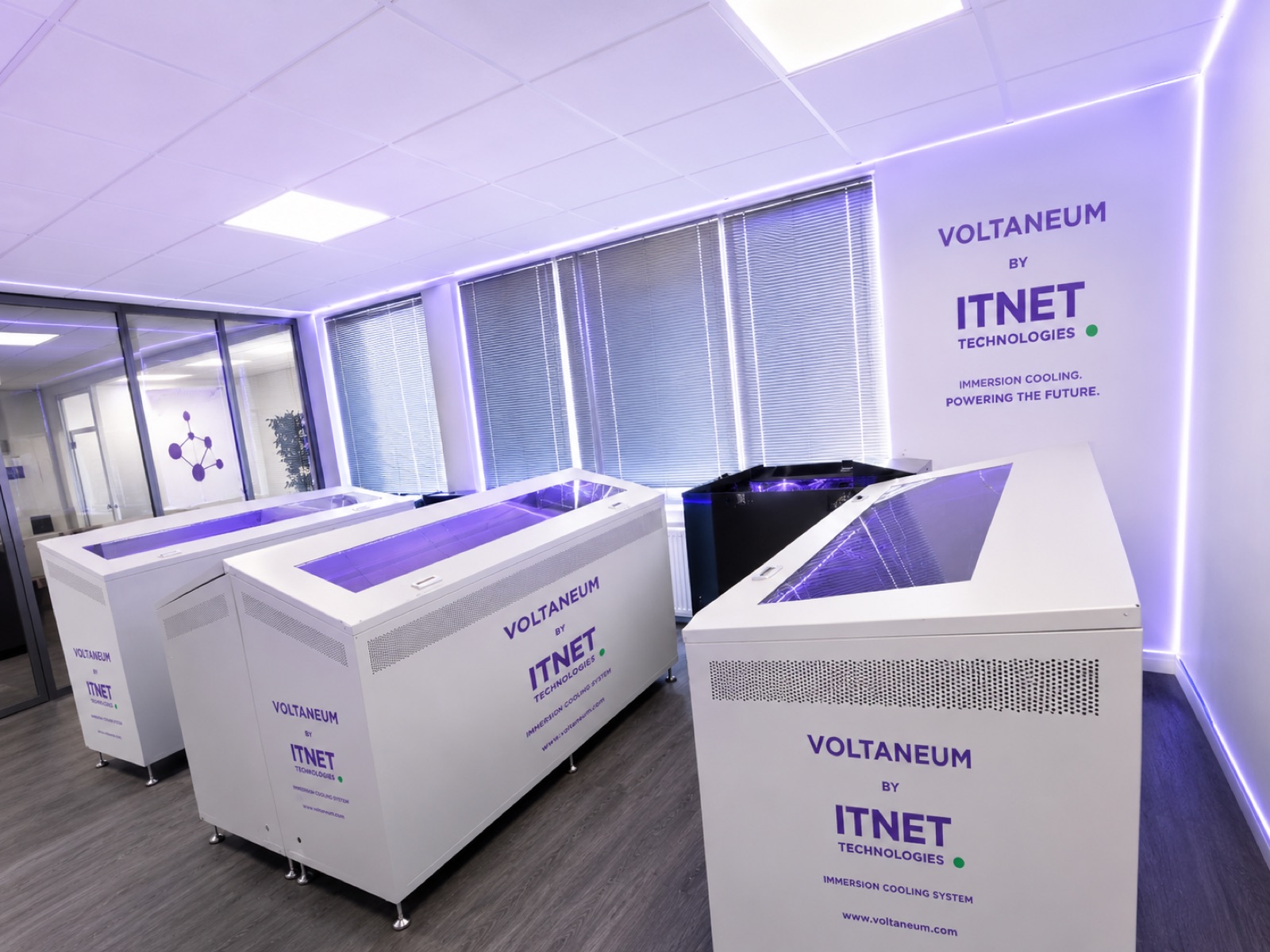
HPC colocation requires continuous thermal density, reliable networking, controlled power and more transparent operations than traditional colocation.
VOLTANEUM connects 10U, 20U or 37U capacity, energy, network, servers and DCIM portal.
HPC colocation with immersion cooling addresses compute workloads that cannot tolerate thermal uncertainty: GPU clusters, simulation, inference, fine-tuning, intensive CPU workloads and scientific or industrial infrastructure.
The page must explain that customers buy usable capacity, not only space: reserved power, cooling, consumed energy, network, OS, remote management access, delivered servers and DCIM monitoring.
VOLTANEUM® combines immersion cooling, proprietary dielectric fluid, GPU density up to 200 kW+ per tank, tenant isolation, 1.03 target PUE, DCIM automation, 2D/3D monitoring and request/payment/provisioning workflows.
The VOLTANEUM® proprietary dielectric liquid provides non-conductive electrical insulation, stronger thermal stability, reduced exposure to dust, oxidation and vibration, and more predictable maintenance through fluid, filtration, acidity, moisture and dielectric strength monitoring.
The -40°C to 250°C range is indicated on VOLTANEUM® packaging. Quality control on the tested batch reports a -37°C pour point, a 250°C open flash point and observed dielectric breakdown voltage of 52 kV.
The VOLTANEUM® white paper download is available after entering a business email in the public page form.
HPC colocation hosts intensive compute workloads in infrastructure designed for power, thermal control, networking, monitoring and operational continuity.
HPC and GPU workloads concentrate heat. Immersion cooling reduces airflow constraints, stabilizes temperature and enables higher density.
Reserved power, cooling cost, metered electricity, network, remote management access, OS, server stock, SLA, maintenance and DCIM visibility.
Yes, through BYOH subject to immersion-ready validation, or through ITNET server orders depending on stock and available datacenter.