When should I choose a VPS?
Choose a VPS for websites, APIs, bastion hosts, staging, monitoring, small business applications or services needing predictable resources without a dedicated GPU.
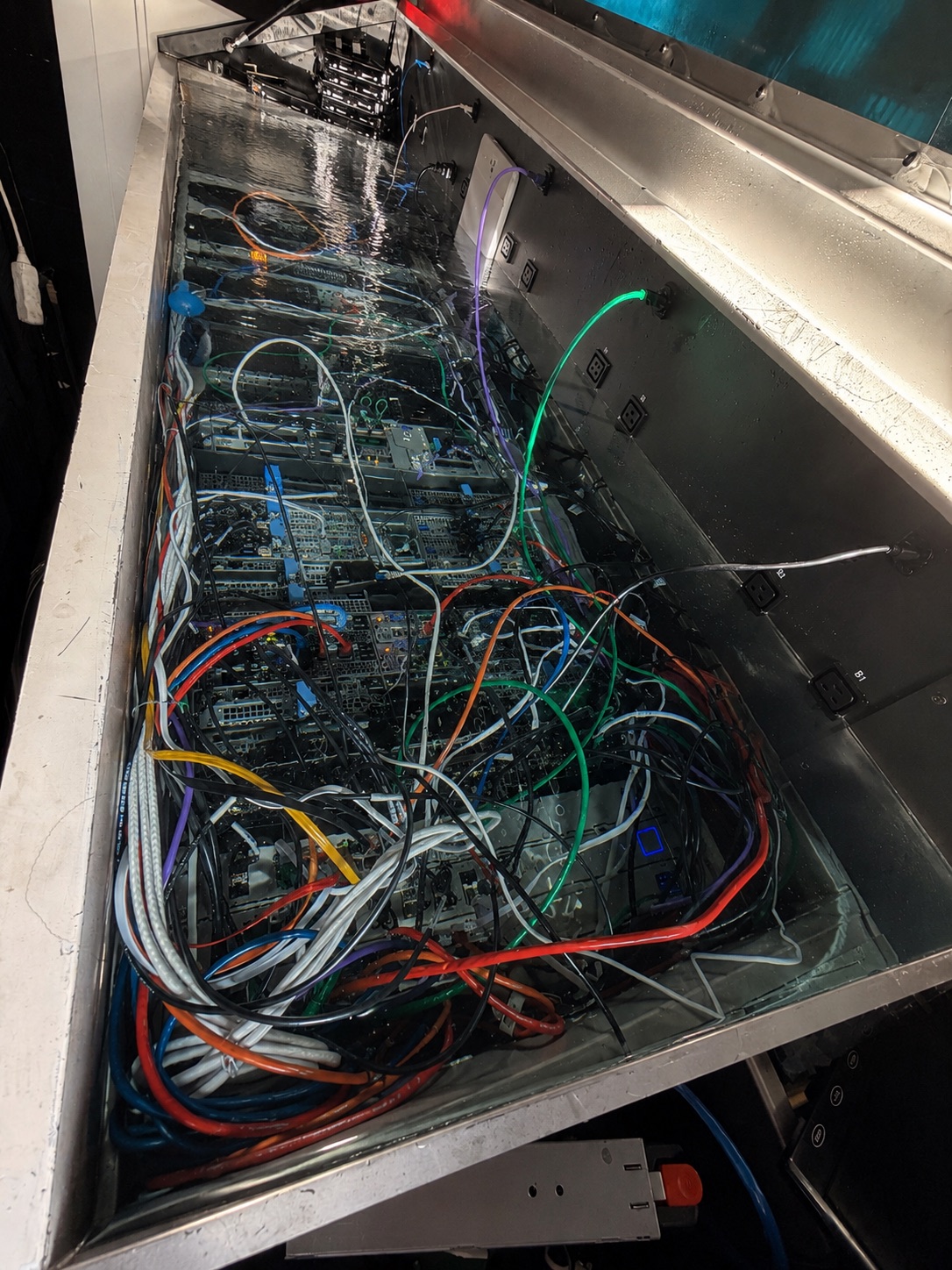
A VPS is enough for websites, APIs, bastion hosts, test environments or classic business applications. A GPU server becomes relevant when parallel compute, CUDA, AI inference or fine-tuning drive the budget.
VOLTANEUM helps build a progressive path: start with Cloud VPS, move to GPU Cloud or GPU server, then reserve bare metal or immersion capacity when density and thermal constraints become critical.
Comparing VPS and GPU server captures a decision intent. The buyer is balancing low cost and flexible VM delivery against more expensive GPU capacity that becomes necessary for CUDA, VRAM, inference or fine-tuning.
Good advice starts from the workload: latency, compute duration, model size, VRAM need, isolation level, NVMe storage, traffic, backup and downtime tolerance. This prevents selling GPU capacity to a project that does not need it.
VOLTANEUM can then offer a clear progression: Cloud VPS, GPU Cloud, bare metal GPU server, then immersion capacity for high density.
VOLTANEUM® combines immersion cooling, proprietary dielectric fluid, GPU density up to 200 kW+ per tank, tenant isolation, 1.03 target PUE, DCIM automation, 2D/3D monitoring and request/payment/provisioning workflows.
The VOLTANEUM® proprietary dielectric liquid provides non-conductive electrical insulation, stronger thermal stability, reduced exposure to dust, oxidation and vibration, and more predictable maintenance through fluid, filtration, acidity, moisture and dielectric strength monitoring.
The -40°C to 250°C range is indicated on VOLTANEUM® packaging. Quality control on the tested batch reports a -37°C pour point, a 250°C open flash point and observed dielectric breakdown voltage of 52 kV.
The VOLTANEUM® white paper download is available after entering a business email in the public page form.
Choose a VPS for websites, APIs, bastion hosts, staging, monitoring, small business applications or services needing predictable resources without a dedicated GPU.
Choose a GPU server when the workload uses CUDA, AI inference, fine-tuning, rendering, simulation, scientific computing or LLMs requiring VRAM.
Yes. The benefit of a platform such as VOLTANEUM is to start with VPS and evolve toward GPU Cloud, GPU server, bare metal or immersion colocation.
Start from the real workload: CPU, RAM, storage, VRAM, network throughput, runtime, isolation level, SLA and monthly cost constraint.